Revised 2025 Fall
In this lesson (the first of two parts) we look at samples of the ways that two great philosophical traditions affected the Abrahamic faiths. The first great philosophical tradition is Platonism (or Neo-Platonism.) The second is Aristotelianism (often also in Neo-Platonist form). The three great Abrahamic faiths are, of course, Judaism, Christianity, and Islam.
Note: Recall Plato’s Cave where enlightenment is to be found in discovering the eternal ideas that lie behind the shadows of perception, ultimately indicating The Idea of The Good: “the universal author of all things beautiful and right, parent of light and of the lord of light in this visible world, and the immediate source of reason and truth in the intellectual” (Repub. VI).
PLATONISM IN JUDAISM
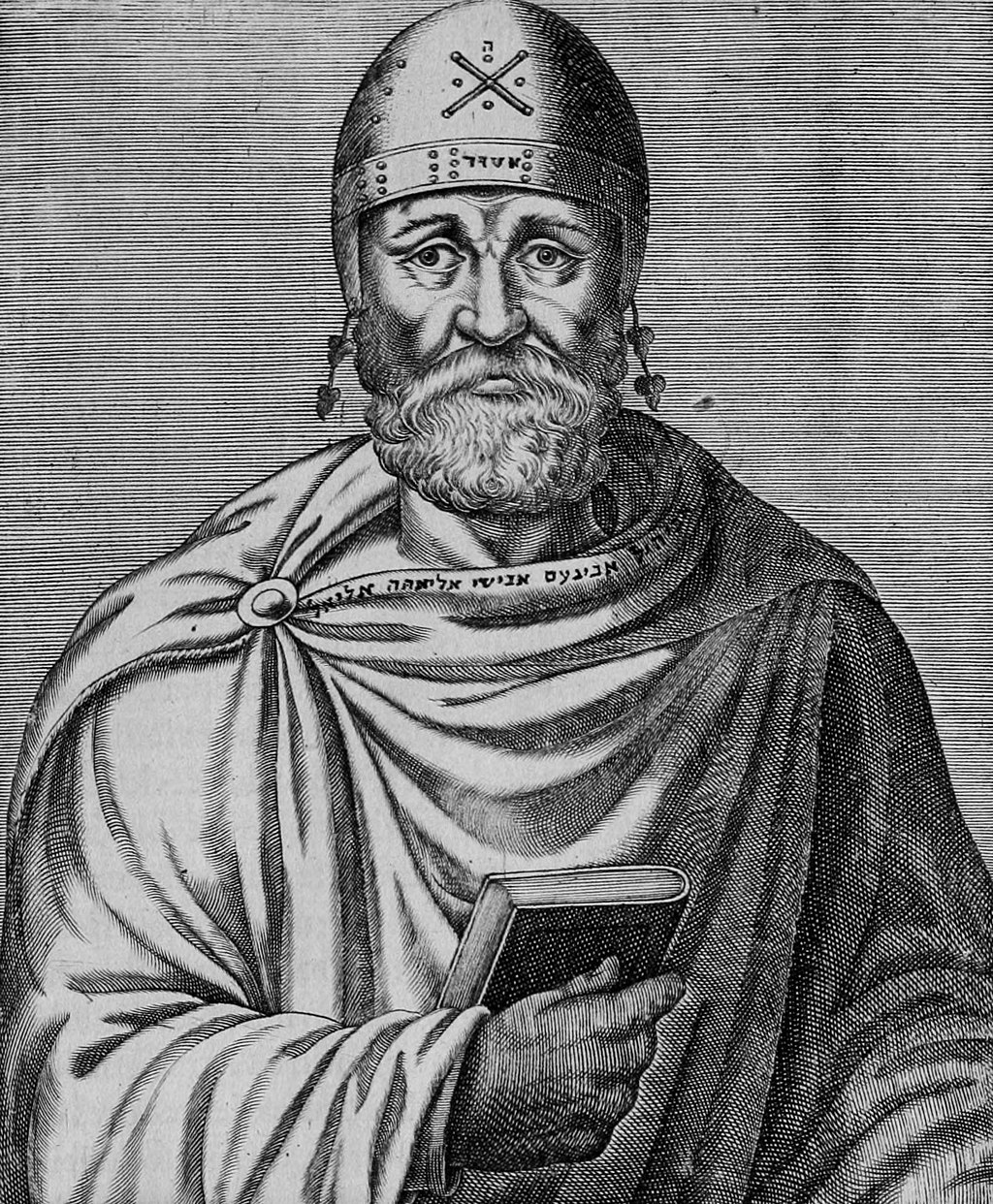
Philo of Alexandria
http://en.wikipedia.org/wiki/Philo
Allegorical Interpretation, I
https://www.earlychristianwritings.com/yonge/book2.html
On the Virtues
https://www.earlychristianwritings.com/yonge/book31.html
PAGAN NEOPLATONISM
Plotinus
http://en.wikipedia.org/wiki/Plotinus
Enneads: On Virtue
http://www.ccel.org/ccel/plotinus/enneads.ii.ii.html
Civic, Contemplative, Purificatory, Exemplary
Porphyry’s Presentation of the Virtues
http://www.tertullian.org/fathers/porphyry_sententiae_02_trans.htm
See: Section Two (Political, Cathartic, Energizing Intellectually, Paradigmatic) aka (Civic, Purificatory, Contemplative, Exemplary)
Enneads: The Good
http://www.ccel.org/ccel/plotinus/enneads.vi.v.html
(See: Zeus)
Enneads: Five Categories (VI.2.8)
http://www.sacred-texts.com/cla/plotenn/enn545.htm
NEO-PLATONISM IN CHRISTIANITY
Augustine
http://en.wikipedia.org/wiki/Augustine_of_Hippo
Handbook on Faith, Hope, & Love
http://www.newadvent.org/fathers/1302.htm
cf Virtues Paradigmatic or Exemplary
On Christian Doctrine
http://www.ccel.org/ccel/augustine/doctrine.xxxix.html
Note: Purpose of scripture? To teach the exemplary virtues.
NEOPLATONISM IN ISLAM
Imam Ali’s Letter 53 – An order to Maalik al-Ashtar
https://www.al-islam.org/sv/node/20881
Advice on justice and equity.
Imam Ali’s Sermon 90 – Praise Belongs to God
https://www.al-islam.org/nahjul-balagha-part-1-sermons/sermon-90-praise-be-allah-who-well-known-without-being-seen
“Plato’s philosophical approach to the Good can be augmented and deepened by an appreciation of Imam Ali’s means of ‘drawing near’ to the Real, for in the Imam’s perspective, intellectual comprehension and spiritual devotion are inseparable and complementary. Integral, deep-rooted justice emerges as one of the fruits of this ‘drawing near,’ just as for Plato, gazing on ‘that which sheds light on all things . . . the Good itself’ results in the capacity to take the Good ‘as a pattern for the right ordering of the state and of the individual.’” (Shah-Kazemi 120)
Shah-Kazemi, Reza. Justice And Remembrance. [Electronic Resource] : Introducing The Spirituality Of Imam ʻali. I.B. Tauris in association with the Institute of Ismaili Studies, 2006., 2006. Texas State – Alkek Library’s Catalog. 22 Aug. 2016.
al-Farabi
http://en.wikipedia.org/wiki/Al-Farabi
The Philosophy of Plato and Aristotle (see pdf link)
http://www.muslimphilosophy.com/farabi/
Note: see pdf page 27 of 84, paragraph number 55, where philosophy is distinguished from religion
Thus the determined opinions in the virtuous religion are either the truth or a likeness of the truth. In general, truth is what a human being ascertains, either by himself by means of primary knowledge, or by demonstration. Now any religion in which the first type of opinions does not comprise what a human being can ascertain either from himself or by demonstration and in which there is no likeness of anything he can ascertain in one of these two ways is an errant religion.
Alfarabi (2015-07-09). The Political Writings: “Selected Aphorisms” and Other Texts (Agora Editions) (Kindle Locations 1817-1821). Cornell University Press. Kindle Edition.
Brethren of Purity
Overview
http://plato.stanford.edu/entries/ikhwan-al-safa/
New Critical Edition (OUP)
http://ukcatalogue.oup.com/category/academic/series/philosophy/epbp.do
The Case of the Animals vs Man . . .
https://archive.org/details/ikhwanussafa00ikhw
Note: see Chs. XX – XXI on the King of Bees
Database suggestion:
Holoduek Jr., John Charles1. “The Philosophy Of Neoplatonism And Its Effects On The Thought Of St. Augustine Of Hippo.” Dialogue (00122246) 55.2/3 (2013): 136-157. Humanities Source. Web. 6 Jan. 2014.
 CourseLinks