Updated 2024 Spring
In this lesson (the second of two parts) we look at samples of the ways that two great philosophical traditions affected the Abrahamic faiths. The first great philosophical tradition is Platonism (or Neo-Platonism.) The second is Aristotelianism (often also in Neo-Platonist form). The three great Abrahamic faiths are, of course, Judaism, Christianity, and Islam.
ARISTOTELIANISM IN ISLAM
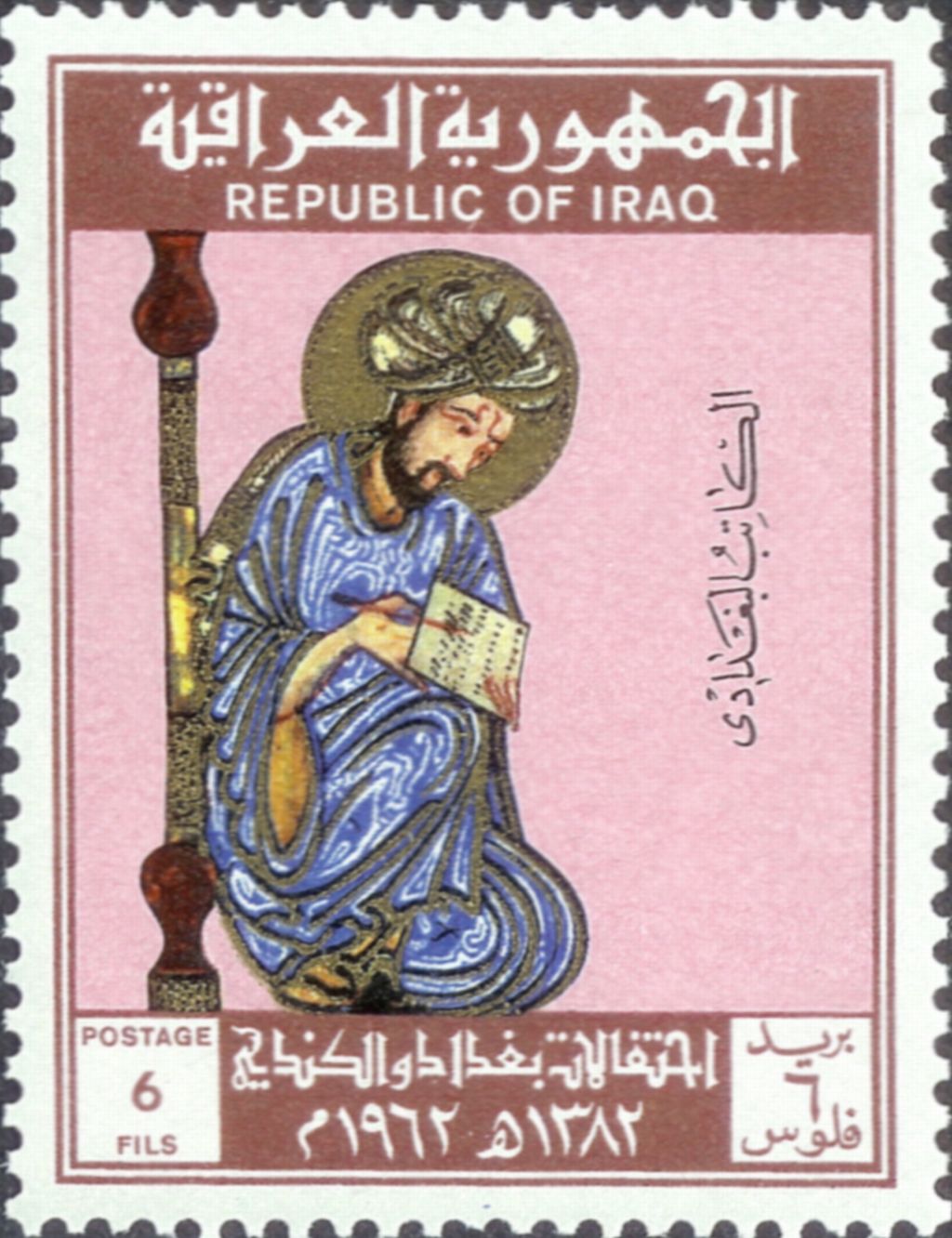
al-Kindi: Father of Islamic or Arabic Philosophy
http://en.wikipedia.org/wiki/Al-Kindi
On First Philosophy (see pdf link)
http://www.muslimphilosophy.com/kindi/index.html
Note: al-Kindi’s text begins on pdf page 32 of 108.
Also available at the Internet Archive (text begins with Part II, 32 of 108) https://archive.org/details/al-kindis-metaphysics
Prof Notes
http://infiniteloom.shoutwiki.com/wiki/Al_Kindi
Averroes: a.k.a. “The Commentator”
http://www.muslimphilosophy.com/ir/art/ir-eb.htm
Overview Stanford Encyclopedia of Philosophy
https://plato.stanford.edu/entries/ibn-rushd/
Emphasis on Impact to European Christians
http://www.newadvent.org/cathen/02150c.htm
On the Harmony of Religion and Philosophy https://www.muslimphilosophy.com/ir/art/ir100.htm
The Incoherence of the Incoherence https://www.muslimphilosophy.com/ir/tt/
Imam Birgivi, a 16th Century Islamic Mystic (Ottoman Empire 1522-1573). https://en.wikipedia.org/wiki/Muhammad_Birgivi
The Path of Muhammad: A Book on Islamic Morals and Ethics. Interpreted by Tosun Bayrak. Foreword by Shaykh Abdul Mabud. World Wisdom, 2005. Internet Archive https://archive.org/details/ThePathOfMuhammad.ABookOnIslamicMoralsEthicsByImamBirgiviByTosunBayrak
Arabic Numerals, Al-gebra, Al-gorithm
https://en.wikipedia.org/wiki/Muhammad_ibn_Musa_al-Khwarizmi
George Saliba: Islamic Science & The Making Of European Renaissance
https://www.youtube.com/watch?v=16eYEdmSh0A
Twenty-First Century Islamic Ethics
Check your library for the ebook: Ramadan, Tariq. Radical Reform : Islamic Ethics and Liberation. Oxford University Press, 2009. EBSCOhost.
Chapter 10 summarizes the author’s suggested approach, where scholars of text are admonished to engage with experts of context. This is the genius of the Baghdad renaissance revived.
JUDAISM
Maimonides
http://www.jewishvirtuallibrary.org/jsource/biography/Maimonides.html
Prof Notes
http://infiniteloom.shoutwiki.com/wiki/Maimonides
Eight Chapters on Ethics (text begins on p. 34 of 180) https://archive.org/details/eightchaptersofm00maim
CHRISTIANITY
Thomas
http://en.wikipedia.org/wiki/Thomas_Aquinas
Summa Theologica
http://www.newadvent.org/summa/
Thomas begins each question with answers that oppose his position. To harvest the teaching of Thomas, be sure to read the part that says “I answer that.”
For evidence of an Aristotelian approach to First Philosophy, see “Does God Exist?” (ST I, q. 2, a. 3).
Ethical teachings in the Summa are organized under:
SECUNDA SECUNDÆ PARTIS.
Faith. Hope. Charity. Prudence. Justice. Fortitude. Temperance. Acts Which Pertain to Certain Men.
For evidence of an Aristotelian approach to ethics, see how Thomas defers to “the Philosopher” and his Nicomachean Ethics to answer the question, “Is Fortitude a Virtue?” (ST II-II q. 123, a. 1).
As with the example of Solomon, whose Proverbs display scholarly respect for Egyptian ethics, here we see that Thomas shows a great deal of respect to pagan, Jewish, and Islamic ethical teachers. Along with the pagan Aristotle, who counts here as “the Philosopher,” we have the Islamic philosopher Averroes who counts as “the Commentator.” Furthermore, as Thomas constructs the seven cardinal virtues, he begins of course with the Gospel virtues of Faith, Hope, and Charity as explicated by Augustine. The other four virtues of Prudence, Justice, Fortitude, and Temperance come right out of Plato’s Republic, Book IV (wisdom, courage, temperance, and justice).
Database suggestion for further reading:
Staley, Kevin. Al-Kindi on Creation: Aristotle’s Challenge to Islam. Journal of the History of Ideas , Vol. 50, No. 3 (Jul. – Sep., 1989) , pp. 355-370. http://www.jstor.org/stable/2709566
 CourseLinks